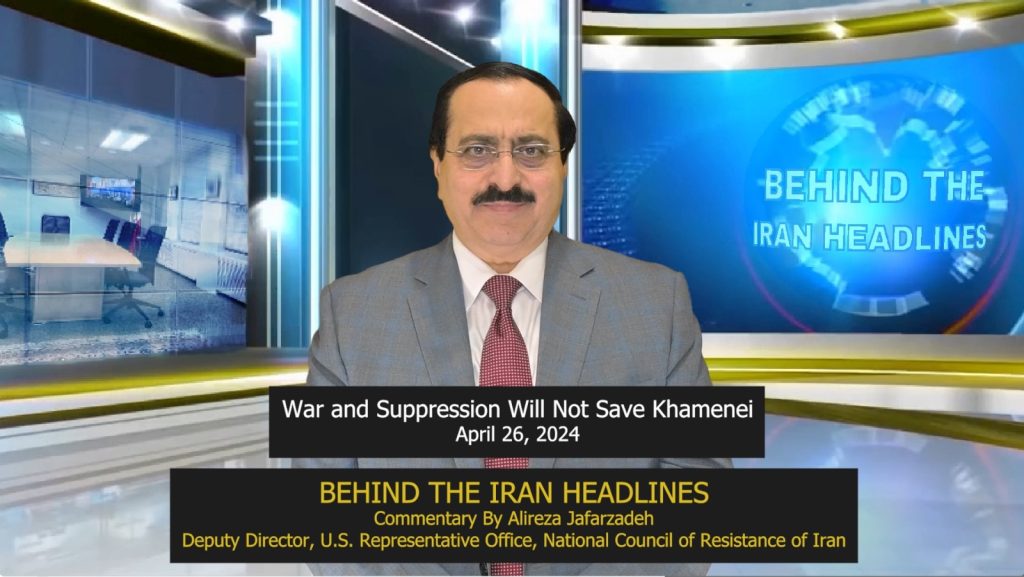
BEHIND THE IRAN HEADLINES Series, April 29, 2024, Alireza Jafarzadeh, NCRI-US Deputy Director
As expected, Iran’s theocratic regime has intensified social and political suppression of citizens following the disastrous military and geopolitical outcome of its April 13 missile and drone attack on Israel.
The regime’s intent is to prevent potential outbursts of protests and create a climate of fear and terror to escape the internal consequences of its warmongering.
At least 9 prisoners were hanged on Sunday, April 21, bringing the total of executions since April 10 to 26 prisoners across Iran.
Just hours before the April 13 attack, Khamenei ordered the strict and forceful implementation of a new misogynistic law to counter what the regime describes as improper hijab. The regime’s oppressive measures against women have reached unprecedented levels of violence since the attack.
An activist in Tehran told REUTERS that the crackdown on women was aimed at “injecting fear into society…” and that “It is no coincidence that on the very day of the attack on Israel, police flooded the streets. They were concerned about the resurgence of unrest.”
Since its inception in 1979, the clerical regime has embarked on external wars and conflicts to derail the internal war it had waged on the Iranian people. The eight-year war with Iraq in the 1980s was the flip side of the mass execution of political prisoners inside Iran and the 1988 massacre meant to stifle the nationwide resistance.
Today, Khamenei’s regime is besieged by economic and social crises and political disarray, particularly after the historic boycott of the March 2024 elections. Unlike the 80s and after a series of nationwide uprisings since 2017, Khamenei’s latest double move of blatant belligerence and suppression will not prevent his regime’s demise.