By: NCRI-US Staff, November 21, 2024
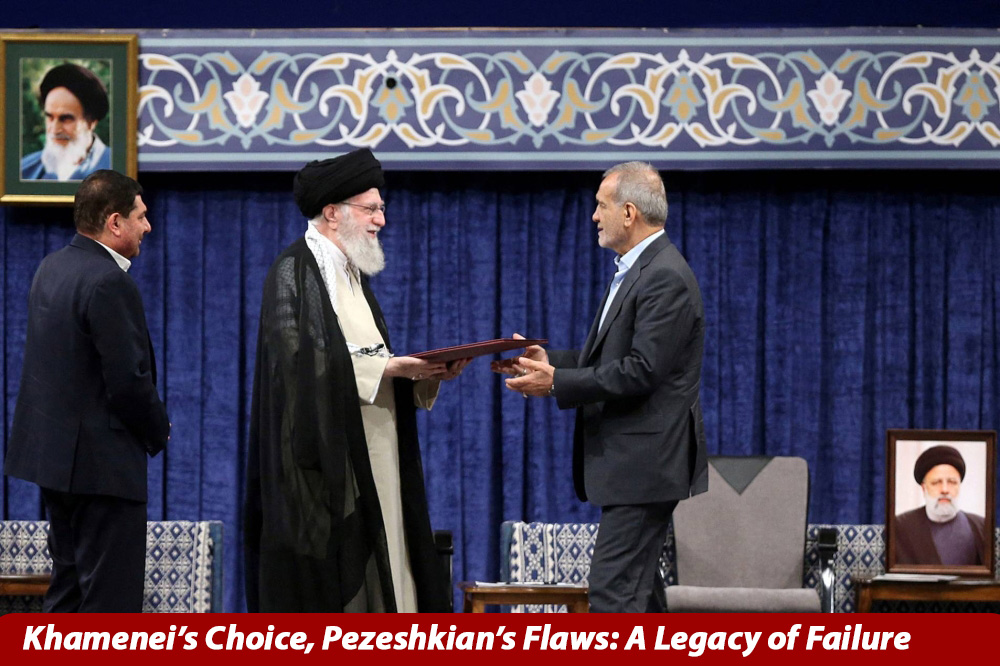
In July, the Iranian regime’s Supreme Leader, Ali Khamenei, handpicked Masoud Pezeshkian as the new President following the death of Ebrahim Raisi. Despite the facade of change and reformation, Pezeshkian’s first 100 days have proven unsuccessful. Amidst growing inflation and economic tension, the regime has not released a customary 100-day review, reflecting one of the many issues that plague Iran today. These economic failures come as political executions across Iran have risen dramatically, with the regime reporting 466 executions since Pezeshkian took office.
Apart from ordinary Iranians continuing to suffer economically since Pezeshkian’s debut, his first few months have been marked by his failures in his campaign promises. In his first campaign speech, Pezeshkian stated, “We make promises and we fail to fulfill them. This is the biggest problem we have.” Despite his promises of opposing internet censorship and violence, he has followed the same steps as his predecessor.
The exchange rate between US dollars and Rials has deteriorated significantly over the last few months, rising from 580,000 rials to the dollar to 700,000 rials. With food prices rising significantly, staples such as bread have become more difficult to afford. Additionally, necessities such as water and housing have greatly spiked in price. In September, Pezeshkian stated Iran is “moving towards collapse” and will face destruction if it does not address issues of energy and resource consumption.
Pezeshkian’s new proposal does not plan to fix this problem. Disregarding the needs of the people, Pezeshkian will increase the taxes on everyday Iranians by 39% and drive up prices by slashing fuel subsidies. Small businesses and ordinary citizens will face the brunt of increasing tax revenue, while repressive forces will continue to be prioritized to stop any demonstration of dissent. Instead, spending will focus on the military forces without taxation on the Islamic Revolutionary Guard Corps (IRGC).
While Pezeshkian proposes “reformist” policies, more and more brutal economic measures will stoke the flames of resistance. As revealed by NCRI-US, the entire economy is controlled by the IRGC, with profits of state-controlled industries, including oil and petrochemicals, funneled towards funding war and terrorism across the Middle East. These industries continue to avoid international sanctions by “creating branches and companies with the same name outside Iran (specifically countries that are not under sanctions),” according to the NCRI-US’s published IRGC Papers. With 80% of the Iranian population living below the poverty line, Pezeshkian’s economic failures have also further exacerbated the issues brought by the regime. To combat this, NCRI President-Elect Maryam Rajavi has proposed a Ten-Point Plan for a future Iran, which includes the removal of deadly anti-labor laws and proposes a free market.