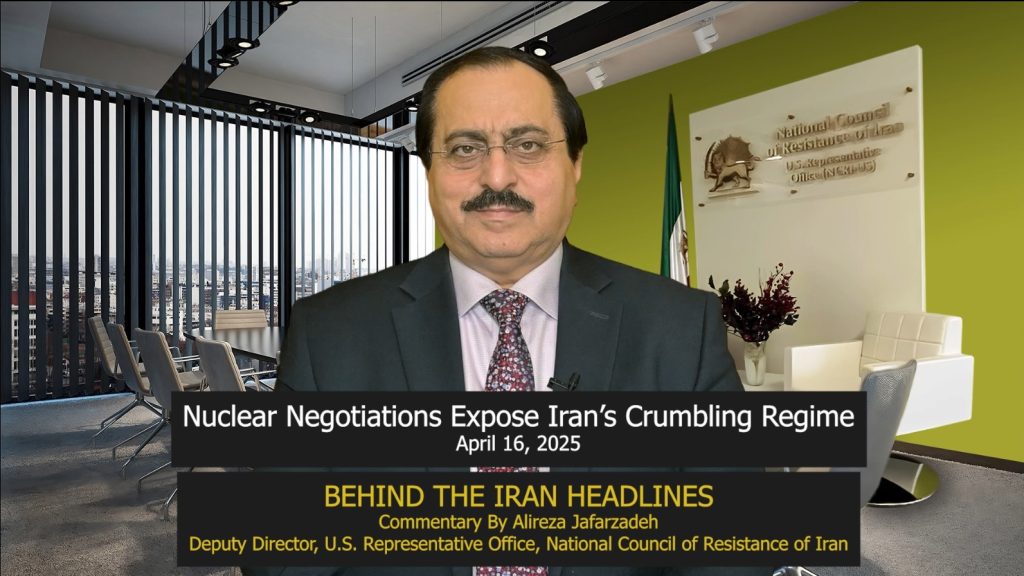
BEHIND THE IRAN HEADLINES Series, April 16, 2025, Alireza Jafarzadeh, NCRI-US Deputy Director
The nuclear negotiations between the Iranian regime and the United States have plunged the clerical dictatorship into one of its deepest crises in years. Although Supreme Leader Khamenei tried to downplay it, it’s in fact an existential impasse for the entire ruling establishment.
From the very beginning, the regime defined its identity through belligerence and exporting terrorism, branding America as the “Great Satan.” Regional proxies became a significant pillar to provide the regime with the “strategic depth.”
Now, faced with devastating sanctions, a bankrupt economy, mounting internal dissent, significant blows to its regional proxies, and the threat of international isolation, it has been dragged back to the negotiating table. Desperation, weakness, and panic are visible within the regime.
Friday prayer sermons on April 11 reflected growing anxiety. In Mashhad, Khamenei’s representative dismissed the negotiations as a repeat of the “cursed JCPOA,” lamenting how the U.S. tore up the last agreement. In Tehran, another cleric warned that engagement with the United States is like a “wolf and lamb” relationship.
Tehran MP Mehdi Koochakzadeh condemned the Oman talks as “shameful,” complaining of secrecy and exclusion, revealing cracks even among loyalists.
These voices expose deep fears about the erosion of the regime’s legitimacy. Indeed, the regime has never found itself so weak and vulnerable.
For Khamenei, this is a double-edged sword. He wants to relieve pressure without appearing weak. Approving talks while avoiding accountability. The regime can neither fully embrace diplomacy nor survive without it. As for the nuclear weapon, it is a means of survival for the regime, which it does not want to give up.
Whether the negotiations succeed or fail, the regime is a sure loser. If they lead to Tehran being forced to shut down its nuclear weapons program, Khamenei would be faced with a more emboldened population seeking change, just as Tehran’s biggest ally, Assad, fell in Syria. If the talks collapse, the regime faces harsher sanctions, more threats, and intensified public unrest.
This moment presents a critical opportunity for the Iranian people. The regime is fractured, fearful, and fatigued. It is not a time for appeasement. It is time to stand on the side of the Iranian people and recognize their right to end the rule of the clerics and establish a free, democratic, non-belligerent, and non-nuclear republic. Indeed, this is the only sure way to end Tehran’s nuclear and terror threat, creating a real opportunity for lasting peace in the region.