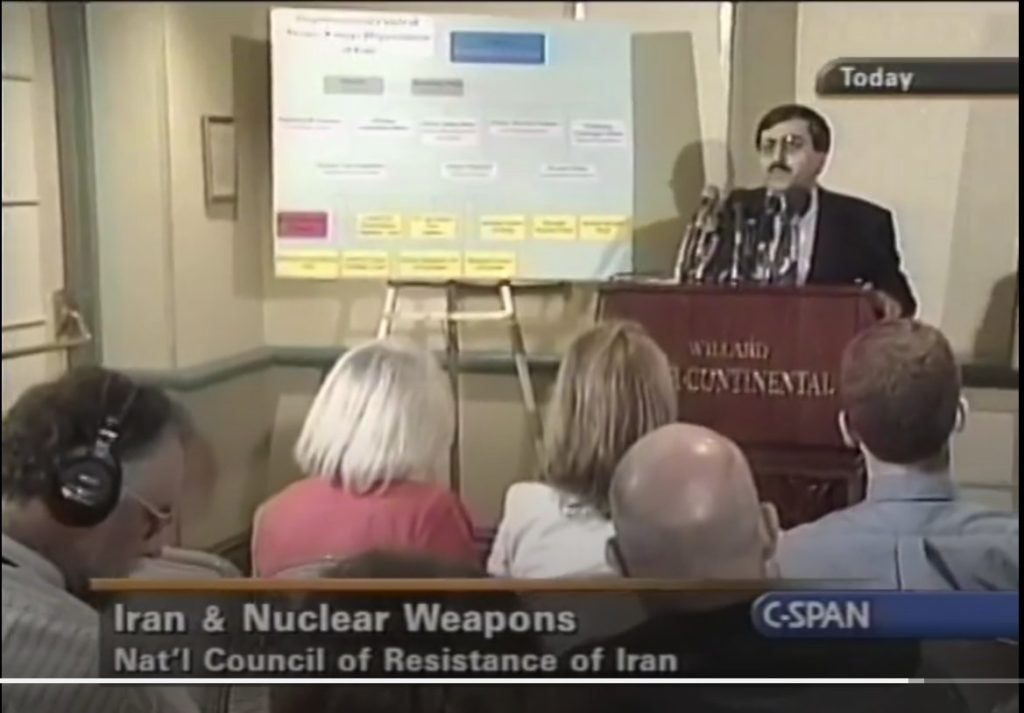
Twenty-four years ago today, on August 14, 2002, the world awoke to the nuclear threat posed by Iran’s ruling regime.
On that day, at a landmark press conference in Washington, DC, the National Council of Resistance of Iran (NCRI), drawing on intelligence gathered by the MEK’s network inside Iran, exposed two major previously secret nuclear sites in central Iran: the Natanz uranium enrichment facility and the Arak heavy-water facility.
The disclosure triggered international scrutiny and IAEA inspections and ultimately contributed to years of UN Security Council action over Tehran’s nuclear activities.
Twenty-four years later, the significance of that revelation is even clearer.
Despite years of negotiations, agreements, concessions, and diplomatic initiatives, Tehran steadily expanded the scope and sophistication of its nuclear program.
By 2025, Iran was enriching uranium to 60 percent purity—a short technical step from weapons-grade levels—and had accumulated more than 400 kilograms at that enrichment level. Iran was the only non-nuclear-weapon state producing and accumulating uranium at such a high level.
In June 2025, the IAEA Board of Governors formally found that Iran’s failures to meet its safeguards obligations constituted non-compliance with its NPT Safeguards Agreement. The Agency had also detected man-made uranium particles at several undeclared locations and repeatedly sought explanations from Tehran about undeclared nuclear material and activities.
The crisis subsequently entered an even more dangerous phase.
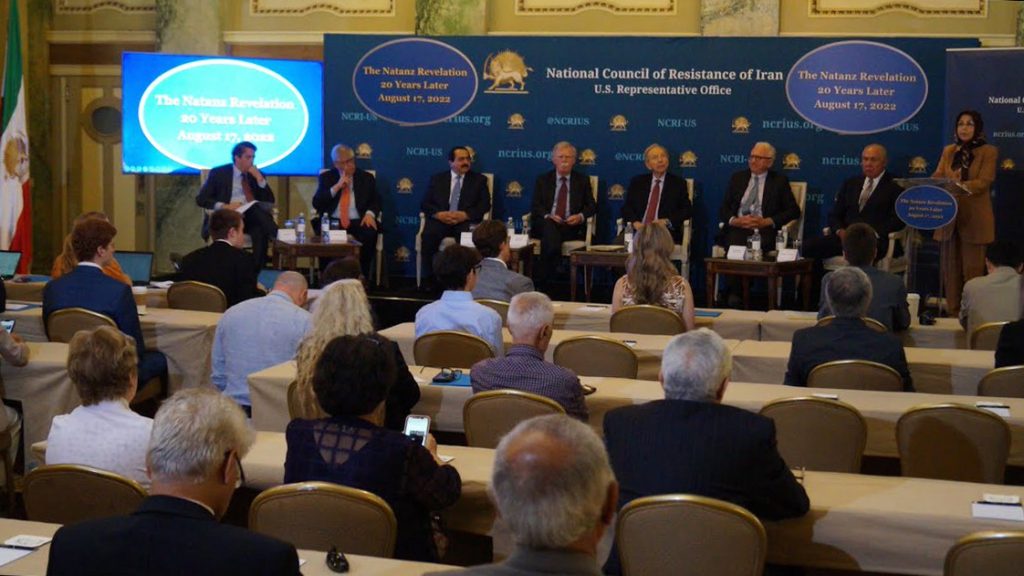
Military strikes in 2025 severely damaged major nuclear facilities, including Natanz and Fordow. But physical damage to these facilities did not resolve the fundamental nuclear question. Instead, another alarming problem emerged: the IAEA lost effective verification of significant quantities of Iran’s enriched uranium. The Agency has said it cannot provide assurance that Iran’s nuclear program is exclusively peaceful unless Tehran resolves outstanding safeguards issues and restores the necessary cooperation and access.
These developments vindicate a central warning behind the NCRI’s August 2002 revelation: secrecy and deception have been intrinsic features of Tehran’s nuclear conduct, not temporary aberrations that can be remedied through concessions alone.
The NCRI has consistently maintained that obtaining nuclear-weapons capability is part of the regime’s strategy for survival and regional power projection. A regime dependent on domestic repression, regional conflict, and warmongering has powerful incentives to preserve instruments of intimidation and strategic leverage.
For more than two decades, successive negotiations have focused on centrifuges, enrichment percentages, stockpiles, inspections, sanctions, and sunset clauses. Yet the underlying political reality has remained unchanged.
The clerical regime has pursued its nuclear program alongside ballistic missiles, regional warfare through proxies, terrorism, hostage diplomacy, and repression at home. In the NCRI’s view, these are not separate policies. They are components of a broader strategy employed by a regime confronting profound domestic vulnerability, growing disarray within its ranks, and a population demanding fundamental political change.
| Date | NCRI Nuclear Revelation |
|---|---|
| August 2002 | Natanz Uranium Enrichment |
| August 2002 | Arak Heavy Water Facility |
| February 2003 | Kala Electric Company in Tehran |
| March 2003 | Lavizan-Shian Facility |
| May 2003 | Lashkar Abad Laser Enrichment |
| November 2004 | Lavizan II |
| September & November 2005 | Khojir tunnels |
| December 2005 | Qom underground enrichment |
| February 2008 | Mojdeh Nuclear Command Ctr |
| September 2009 | METFAZ underground Site |
| September 2010 | Abyek underground enrichment |
| April 2011 | TABA centrifuge parts production |
| July 2011 | SPND nuclear bomb making |
| February 2015 | Lavizan-3 enrichment facility |
| April 2017 | Plan 6 in Parchin complex |
| October 2020 | New Nuclear Weaponization Site |
| December 2024 | Re-activating Sanjarian Site |
| January 2025 | SPND: Developing Nuclear Warhead in Semnan and Shahrud |
| May 8, 2025 | Rangin Kaman (Rainbow) Site, nuclear warhead development |
| June 10, 2025 | Kavir (Desert) Plan has replaced the AMAD |
The events of the past two years have also demonstrated another important reality: military action may destroy facilities, centrifuges, and nuclear infrastructure, but it cannot eliminate the political source of the nuclear crisis. Nor have decades of appeasement, economic incentives, and agreements produced a lasting solution.
The choice, therefore, should not be reduced to a foreign war or accommodation with the regime.
A third, decisive option has too often been excluded from Western policy calculations: the Iranian people and their organized resistance seeking democratic change from within Iran.
The ultimate solution to the nuclear threat is inseparable from Iran’s future.
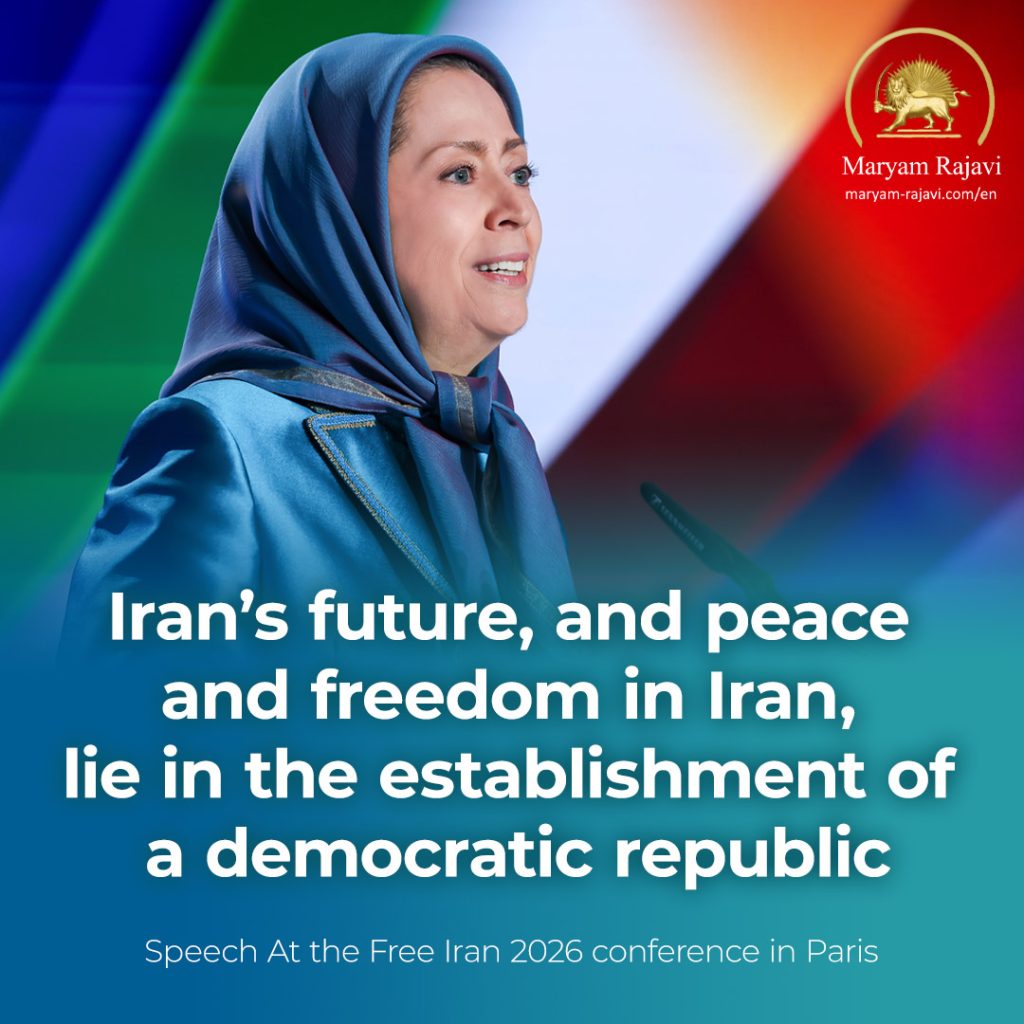
A democratic, secular, and non-nuclear republic – chosen by the Iranian people and committed to peaceful relations with the international community- would have neither the strategic rationale nor the political need for a clandestine nuclear weapons program.
The NCRI’s mantra is Freedom and Peace!