
AP: “A sea of protesters, chanting and carrying Iranian flags, gathered outside the United Nations General Assembly Tuesday to oppose the Iranian delegation to the U.N.”
The gathering underscores a proven reality: The NCRI stands as the sole opposition alternative to the regime with genuine popular support on the ground
New York, September 23, 2025. On a bright autumn morning in New York, a sea of banners and voices converged outside the United Nations. What began as a routine rally swelled into a large demonstration of solidarity — not just with those who had left Iran, but with the millions inside it who are quietly, and sometimes dangerously, resisting. Families, students, former political prisoners, as well as US dignitaries stood shoulder to shoulder, their faces lit by conviction.
In a video address, Mrs. Rajavi hailed the gathering as the “true voice of the Iranian people before the United Nations,” linking the protest to recent uprisings across Iran. “The message is very simple and clear: overthrow and democratic change—a democratic republic, with freedom and democratic rights,” she said. Citing 1,817 executions in just 14 months, she urged world leaders to “end appeasement” and prosecute Iran’s rulers for crimes against humanity. “The seat of the Iranian people at the United Nations must not be given to a regime of executions and massacres,” she declared.
Distinguished former US officials join voices for a free Iran: READ MORE
International media report the gathering: READ MORE
Prominent American figures amplified the call. Former U.S. Attorney General Michael Mukasey said conditions for the regime’s collapse are “more favorable now … than they have been in decades,” while dismissing Pezeshkian as “a mouthpiece for the mullahs.” Former Congressman Ted Poe praised the NCRI’s endurance and warned against a return to monarchy: “You gave your lives to get rid of a dictator because you wanted to be free. Now some are talking about replacing that dictator with one of his family members. That is not a good idea.”
Young Iranian-American speakers took the stage in quick succession, knitting together history, grief, and a concrete plan for change. Several emphasized that this was not a nostalgic call to an older order or a wish for exile politics; instead, it was a present-tense insistence that an organized alternative exists — a disciplined, woman-led movement that has articulated a clear roadmap for a secular, democratic, non-nuclear republic. That message threaded through the speeches like a refrain: the future being imagined here was not a return to past dictatorship but a complete reimagining of government rooted in democracy and people’s sovereignty.
What made this rally stand out was the surge of youth at its core. From high-schoolers to college activists, they not only spoke but ran the program, infusing it with urgency and hope — a new generation visibly claiming Iran’s future as their own.
Veterans of international service and human-rights advocates framed the rally in practical terms. They described decades of repression, catalogue after catalogue of abuses, and an intelligence picture that, shows a regime willing to repress its own citizens even as it projects power abroad. Yet their testimony was also an argument: repression is not the same as stability, and the organized resistance they endorsed — with its resistance unit networks inside Iran and a well-define political program — offered both a moral alternative and a practical plan for transition.
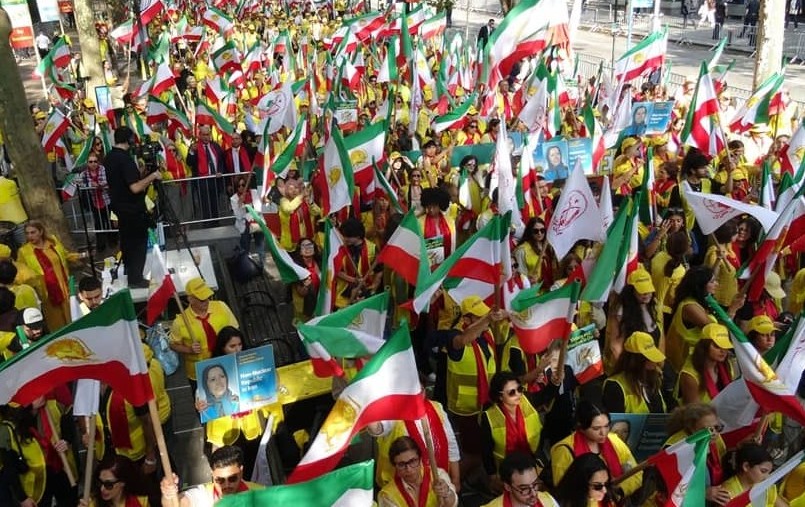
Voices from within the diaspora added personal urgency. One woman recounted how her father had been jailed years ago for distributing leaflets; another spoke of losing relatives to political executions. Younger attendees described a generational refusal to accept clerical rule or a return to monarchy — instead, they spoke of a republic where women lead in every field, religious freedom is protected, and the death penalty is abolished. These personal stories, raw and specific, gave the rally its heartbeat: it was not an abstract policy debate but a living movement of people insisting on dignity.
Organizers and allies tied the narrative to a series of concrete claims — past exposes of covert activities, repeated denunciations of executions, and a steady stream of reports about organized resistance units inside Iran working to amplify dissent. Whether attendees accepted every factual assertion or not, the rhetorical point was clear: this was not a fringe protest but a coordinated, long-running campaign with both a political program, namely Mrs. Maryam Rajavi’s 10-Point plan for a free Iran and an operational presence inside the country.
The gathering made one thing unmistakably clear: the NCRI is widely seen on the ground as the only organized opposition with real, popular support to challenge the regime.
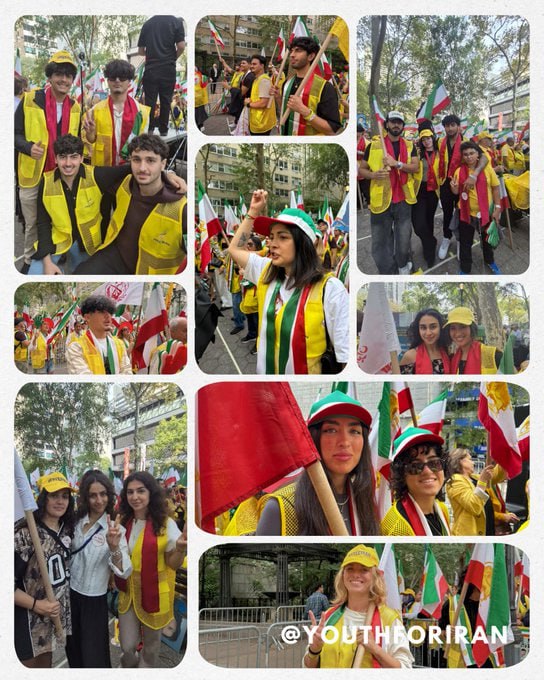
What set this gathering apart was the unmistakable energy of youth: from high-school students to young professionals and college activists, it was their voices that carried the day. They didn’t just attend — they organized, emceed, and delivered fiery speeches that drew roars of approval. Observers noted how seamlessly the younger generation ran the program, infusing it with urgency, defiance, and hope. In a movement often defined by decades of struggle, this rally felt different — it was animated by the confidence of a new generation determined to claim Iran’s future as their own.
Throughout the day, chants and signs called for freedom, for justice, and for the right of Iranians to decide their destiny. Speakers urged the United Nations and other global actors to listen and to act: recognize the legitimacy of popular demands, enforce international resolutions, and hold accountable the Iranian regime leaders responsible for crimes against civilians. Appeals were made for principled pressure rather than disinterested diplomacy — for policies shaped by human-rights realities rather than geopolitical convenience.
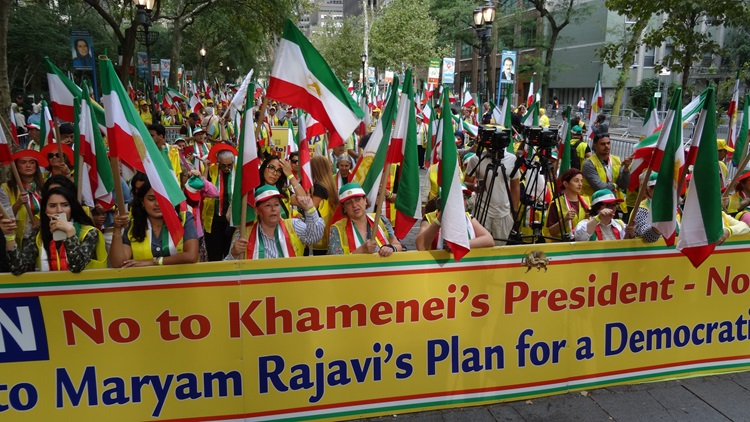
If there was a single takeaway from the gathering, it was this: however long repression lasts, organized resistance, clear principles, and the unity of voices inside and outside the country are powerful forces. Whether and how the world chooses to respond to that force remains an open question — but on that day in New York, the participants left with no doubt that their movement is ready to be part of Iran’s future.