‘Decades of appeasement have emboldened this dictatorship,’ Iranian dissident says
By Beth Bailey Fox News, Published October 25, 2024 4:00am EDT
Excerpts:
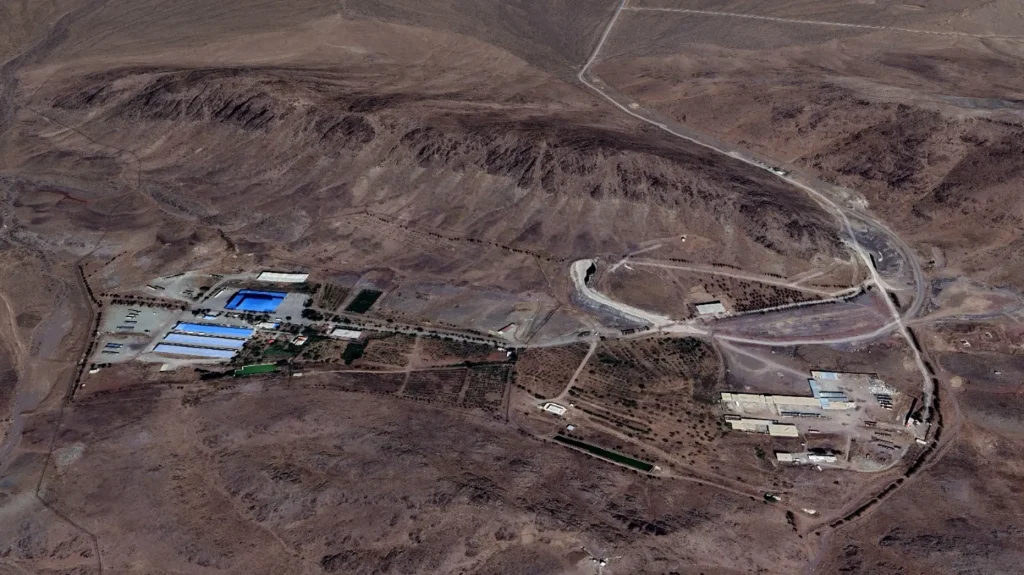
A leading Iranian dissident group, the People’s Mojahedin of Iran (MEK), has provided Fox News Digital with information about a secret site where the Islamic Republic of Iran allegedly stores and prepares the missiles it uses against foes, sells to allies and provides to its proxies.
Located in a mountainous region outside of Eshtehard City, northwest of Tehran in Alborz province, the camp, known as the Shahid (Martyr) Soltani Garrison, is heavily guarded and surrounded by two rows of barbed wire. It has purportedly seen increased activity in the latter part of 2024, with the MEK noting that “more than ten trailers carrying missile parts” passed into the camp in July.
Among the weapons stored at the site are the Shahab-3, Qiam, Fateh and Fath series ballistic missiles, the MEK said.
The MEK provided satellite imagery showing two distinct sections of the Shahid Soltani Garrison. Above-ground storage sites “were established at least 15 years ago” and include a segment of one-floor warehouses and one three-floor warehouse that offer a combined 6,500 square meters of storage space. Around 10 buildings in another segment of the garrison offer up an additional 3,000 square meters of space. Underground tunnels constructed on the site between 2017 and 2021 offer more storage locations.
According to the report, the Al-Ghadir Missile Command, an element of the Islamic Revolutionary Guard Corps’ Aerospace Force, is responsible for the camp. IRGC Brig. Gen. Partovi was the last known commander of the site. The MEK stated that Col. Mohammad Reza Hakimzadeh and Col. Barati of the Eshtehard Corps of the IRGC are responsible for administrative affairs related to the camp.
In 2010, the Al-Ghadir Missile Command was sanctioned by the U.S. as well as by the EU. Commanders within Al-Ghadir Missile Command, including Mahmoud Bagheri Kazemabad and Mohammad Agha Jafari, have also been subject to U.S. sanctions.
Ballistic missiles of likely and certain Iranian origin have previously targeted U.S. forces. Iran-backed militias fired an unknown close-range ballistic missile at Al Asad Air Base on Nov. 21, 2023, resulting in eight injuries and damage to infrastructure.
Alireza Jafarzadeh, deputy director of the National Council of Resistance of Iran’s Washington office, shared a different approach with Fox News Digital. He explained that “true democracy in Iran and peace and tranquility in the region depend on the regime’s downfall, a responsibility that lies with the Iranian people and their organized resistance.”
“The Iranian regime’s survival depends on exporting terrorism and belligerence while brutally oppressing the Iranian people,” Jafarzadeh said. Given that “decades of appeasement have emboldened this dictatorship,” he called for enforcement of “the terror designation of the IRGC and Ministry of Intelligence and Security” and recommended that “supporting the Iranian youth and Resistance Units to confront the IRGC are crucial steps that the United States and European nations must adopt.”
On Jan. 8, 2020, Iran launched 27 theater ballistic missiles toward Al Asad Air Base. Of these, 11 Fateh and Qiam missiles landed inside the U.S. base, according to a medical study of the attack’s effects. The missiles’ impact resulted in around 35 cases of traumatic brain injury or concussion.