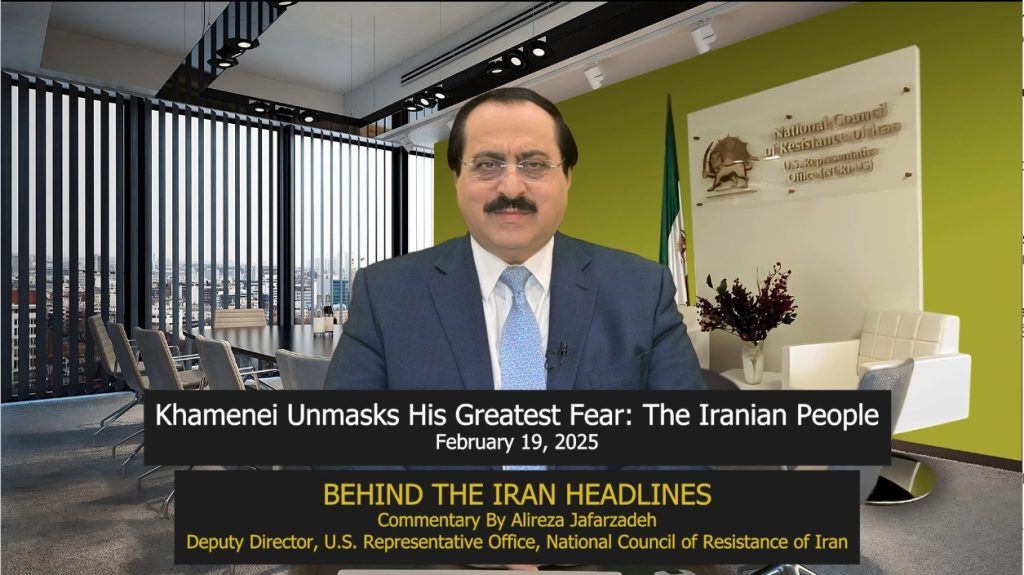
BEHIND THE IRAN HEADLINES Series, February 19, 2025, Alireza Jafarzadeh, NCRI-US Deputy Director
Iran regime’s Supreme Leader Ali Khamenei’s latest speech on February 17 revealed a profound truth: the Iranian regime’s greatest fear is not foreign intervention but the Iranian people themselves. Speaking before a carefully vetted audience, Khamenei boldly claimed that Iran faces no external military threats, boasting about elite defense capabilities. Yet, beneath this facade of confidence, his deepest anxieties surfaced.
Khamenei’s emphasis on so-called ‘soft warfare’—the battle for public opinion and internal dissent—exposed the regime’s vulnerability. His repeated warnings about enemies creating doubt among the people reveal a regime grappling with a legitimacy crisis. The real threat, as Khamenei knows too well, comes from Iranians, particularly the youth, who are no longer swayed by regime propaganda.
Desperation seeped through his appeals to state media and security forces to reinforce ideological loyalty. His calls for increased propaganda, control of narratives, and psychological warfare show that the regime’s foundation is crumbling from within. The fact that he must rely so heavily on manufactured messaging proves the clerical dictatorship’s diminishing grip.
Ultimately, Khamenei’s speech was less about projecting strength and more about masking despair. When a regime’s primary concern is controlling its people’s minds rather than defending its borders, it signals deep institutional decay.
The Iranian people’s demand for freedom is stronger than ever. As the National Council of Resistance of Iran’s President-elect Maryam Rajavi’s Ten-Point Plan outlines, the future belongs to a democratic Iran—free from the tyranny of ayatollahs and kings, free from fear and repression.
The international community must recognize this reality and subject Tehran to maximum economic, diplomatic, and political pressure. This should begin by triggering the snapback mechanism and reinstating all UN Security Council sanctions.