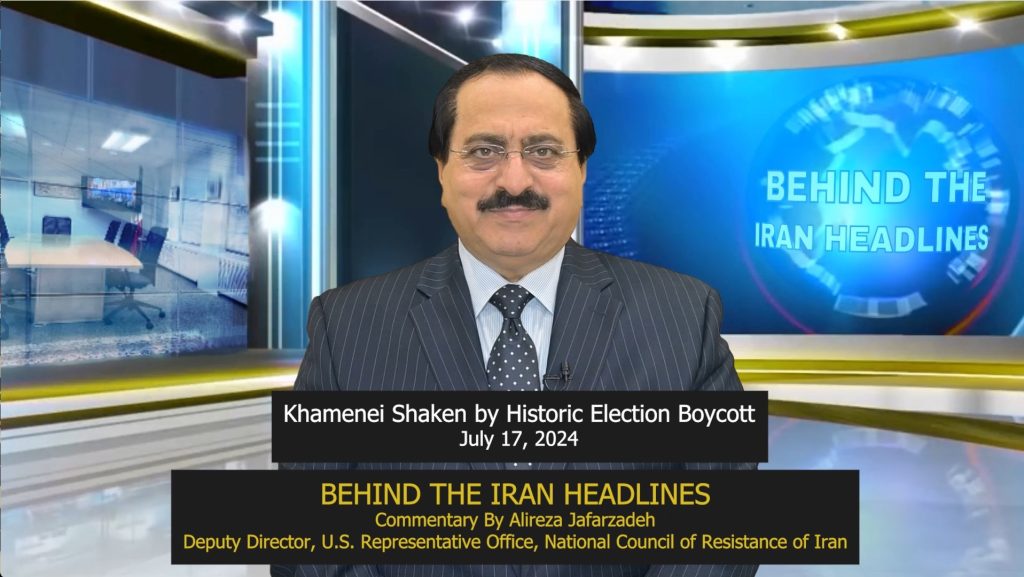
BEHIND THE IRAN HEADLINES Series, July 17, 2024, Alireza Jafarzadeh, NCRI-US Deputy Director
In the recent Iranian presidential sham election, a staggering 91% of the population boycotted the vote, according to the monitoring of over 2,000 polling stations in 248 cities and 60 villages across 31 provinces by the social network of the MEK in Iran. This massive boycott sent a powerful message of Iranians’ resolve to overthrow the theocratic regime, exposing deep cracks within Supreme Leader Ali Khamenei’s rule.
The sudden death of Ebrahim Raisi, Khamenei’s hand-picked president, was a strategic and destabilizing blow to Khamenei and his regime. Raisi was a key figure in Khamenei’s plan to consolidate power and ensure a smooth leadership transition to preserve the ruling theocracy and its continuity following his passing.
Raisi’s demise forced Khamenei to approve, along with 5 other trusted figures, the peripheral insider Masoud Pezeshkian, a less threatening figure from a heavily side-lined rival group, as a ploy to possibly increase voter participation.
Khamenei’s tactic, however, hugely backfired: The election was boycotted as never before, even according to the regime’s official numbers. Despite Pezeshkian’s loyalty, his rise did not quell the internal strife but instead underscored the regime’s deep-seated divisions.
This turmoil has further weakened Khamenei’s regime, making it more vulnerable to internal dissent and external pressures. The massive election boycott and ensuing factional infighting have revealed the fragility of Khamenei’s hold on power.
Regionally and internationally, the clerical regime’s instability is becoming more apparent. Tehran’s aggressive policies are facing increased resistance from neighboring countries, while global powers are adopting firmer stances against Tehran’s nuclear ambitions and support for terrorism.
Khamenei is now at a crossroads. He can either continue his repressive and warmongering stance, risking further uprisings, internal fragmentation, and external isolation or make significant concessions. Although both options carry substantial risks for him, his past decisions indicate he would opt for the first option. Either way, significant upheaval and change are on the horizon.
Raisi’s death and the subsequent race to find his replacement mark the beginning of a new chapter in the Iranian people’s ongoing struggle for freedom and democracy. The current political, economic, and social environment in Iran is ripe for fundamental transformation toward a democratic, secular republic.