By: NCRI-US Staff
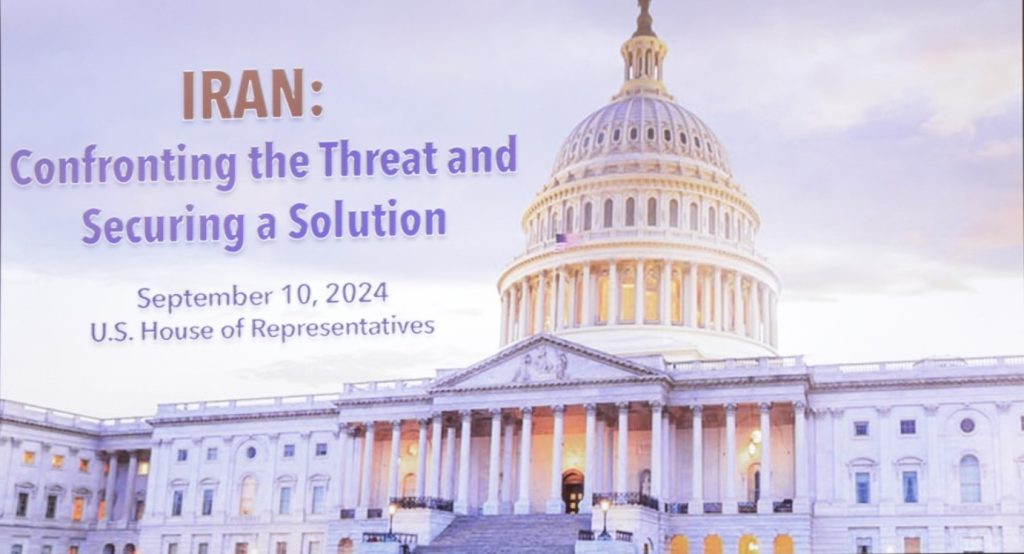
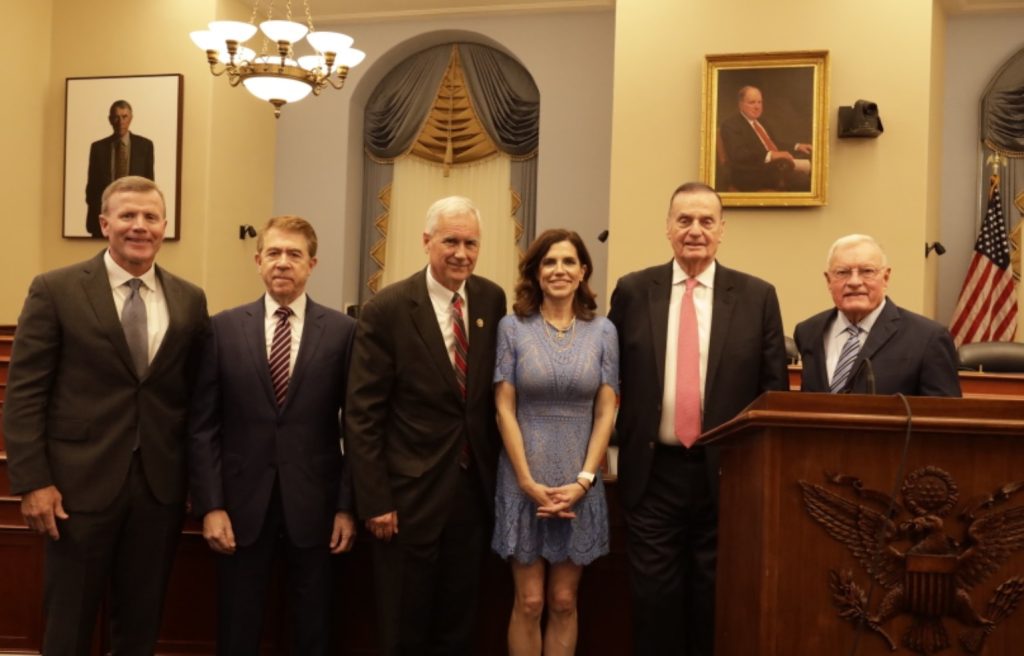
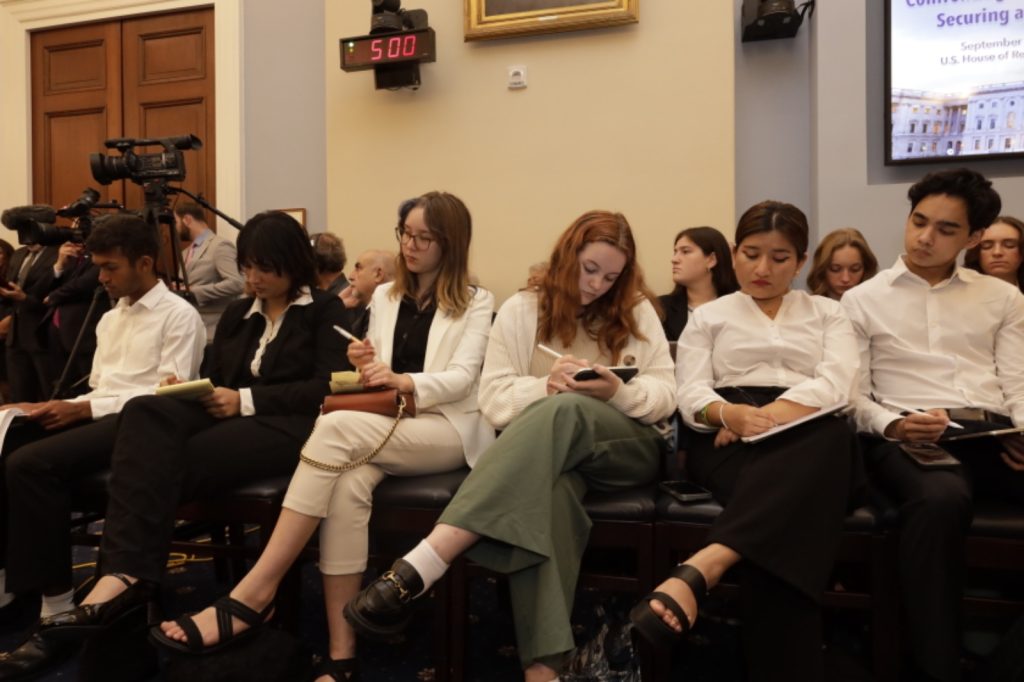
Washington, DC – September 10, 2024. An expert panel titled “Iran: Confronting the Threat and Securing a Solution” was held on Capitol Hill. The speakers included former military generals and foreign affairs experts, with several U.S. House members opening the event. The panel featured Generals James Jones and Tod Wolters, Lt. Gen. Joseph Kellogg, and Ambassador Lincoln Bloomfield, Jr.
Representative Tom McClintock (R-CA) provided introductory remarks, followed by Rep. Nancy Mace (R-SC) and Senior House Foreign Affairs Committee Member Rep. Brad Sherman (D-CA). The House members emphasized on a number of house resolutions, including H. Res. 1148, which condemns the Iranian regime and its associated terrorism, proxy wars, and domestic suppression, while offering some policy suggestions.
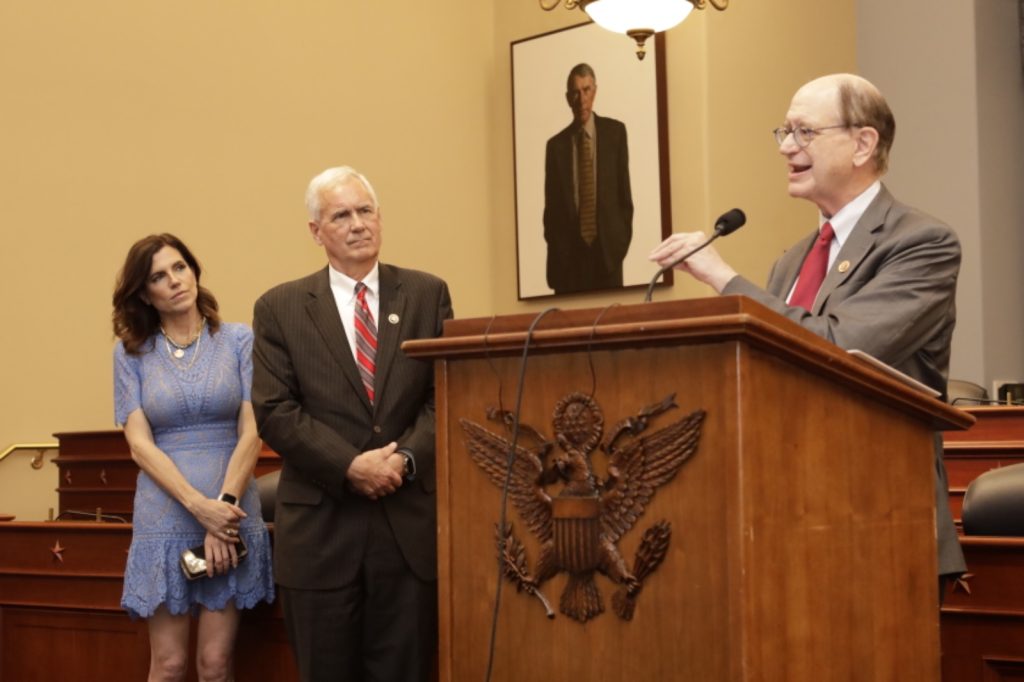
Congressman McClintock started by stating, “Congressional support has manifested in the broad bipartisan sponsorship of House Resolution 100, which supports the National Council of Resistance of Iran’s 10-point plan for the future of Iran.” He asserted that the regime’s threat is “not just a humanitarian issue, it is a national security issue for the world.”
Subsequently, Congresswoman Mace spoke about her meeting with the political prisoners of Iran in Paris, where she heard their “horrific stories of survival under the regime.” She stated, “By being here today, we condemn the Shah’s oppressive dictatorship and stand in solidarity with Resistance Units inside Iran, as well as Iranian opposition in Ashraf 3 in Albania.” The Congresswoman concluded her remarks by stressing the importance of solidarity with the Iranian resistance, affirming how the “leaders of the free world” must join them in supporting a democratic, secular and non-nuclear Iran.
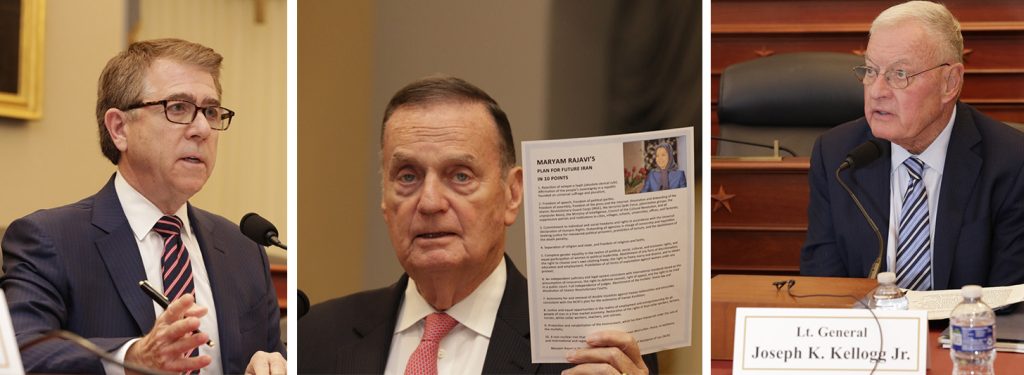
Congressman Sherman also spoke, sharing his experience with the NCRI: “for 28 years, I’ve been working with the National Council of Resistance of Iran to try to create an Iran that is a benefit to the world.” The National Council for Resistance in Iran has been, and the MEK, let us not forget what they did for the world at the beginning of this century, when they exposed in 2002 the Iranian nuclear program.
And let us not forget the incredible brutality that this regime has had for that organization, whether it be the prison massacre of 1988 or whether it be what we see in Albania, in Brussels, and around Europe, around the world.
Acknowledging the work of the Mojahedin-e-Khalq (MEK), Sherman noted, “If you want to know and understand someone, ask them, ‘Who are your enemies?’ The Iranian government has done more to go after the MEK than any other project they’ve had in the world. This tells me you must be doing something right.” He emphasized the need for a democratic Iran that reflects the rights of its people.
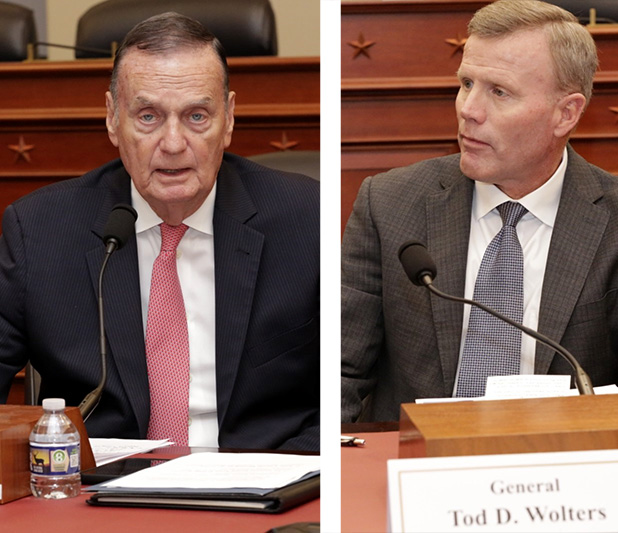
General James Jones opened the panel by acknowledging his gratitude for the turnout at Tuesday’s congressional briefing. Turning to his fellow panel members, he thanked them for the privilege of being able to work with them and their dedication to public service. General Jones explained the significance of understanding history to resolve issues in the present, exemplifying this message by providing an accurate history of the NCRI and MEK’s efforts. Mentioning Maryam Rajavi’s leadership, and her Ten-Point plan, which he described as a “Jeffersonian democracy for the future of Iran,” adding, “It’s where Iran is going to go and wind up, and we’re going to make it happen hopefully in the very near future.”
Echoing General Jones’ sentiments, Ambassador Lincoln Bloomfield Jr. emphasized the need for a shift in U.S. policy toward Iran, pointing out that while global perception on the resistance has evolved, the U.S. government has yet to adjust its stance. He stated American perspectives “haven’t moved off that lily pad, even though the facts have dramatically changed.” Urging Congress to recognize the growing Iranian threat, he cited the UN Special Rapporteur on the situation of human rights in Iran. Mr. Bloomfield concluded by stating that addressing the Iranian regime’s global threat is the “epicenter of a path to a more peaceful and prosperous [Middle East].” Ambassador Bloomfield added, “The Ten-Point Plan is now supported by one hundred twenty five former presidents and prime ministers, four thousand parliamentarians from legislatures in 40 countries, including 34 majorities around the world who support the NCRI and the 10 point plan and 75 Nobel laureates. They’ve all endorsed Mrs. Rajavi, the NCRI and the Ten-Point Plan.”
Adding on to the Ambassador’s point, General Tod Wolters, who served with the Air Force and was a Supreme Allied Commander of Europe, acknowledged the regime’s presence in international conflicts: “And as we’ve watched the nefarious activities of Russia with respect to Ukraine, we’ve seen the fingerprints of the Iranian regime involved in every single one of those actions.” He argued that “democracies of the globe” must “push on the issue and educate on the issue with as much force” as possible. He continued, “I would just say that as a military member previously, what may surprise you, the two areas of focus that we can move out on as quickly as possible is, number one, educate our fellow citizens with the facts. And number two, in that education process, make sure that they understand that this Iranian regime is one that has been in bad business for four and a half decades. They are the masters at disinformation.”
Next, Lieutenant General Joseph Keith Kellogg Jr. began his speech by describing the U.S. as always in a state of “constant peril because we [the U.S.] have not understood that regime.” Mr. Kellogg stated, “Iran is the destabilizing force in the Middle East. They are behind Hezbollah. They are behind the Houthis. They are behind Hamas. They provide weapons, they provide training, and equipment.” Mr. Kellogg called for labeling Iran as non-compliant with the Nuclear Non-Proliferation Treaty and raising economic sanctions in order to allow “dissidents” to “take control of the country.”
The Congressional Briefing ended with a brief Q&A session and General Jones’ conclusion: “we hope that you will have the day to spread the word around about what our future should look like, what our policies should look like.”