By NCRI-US Staff
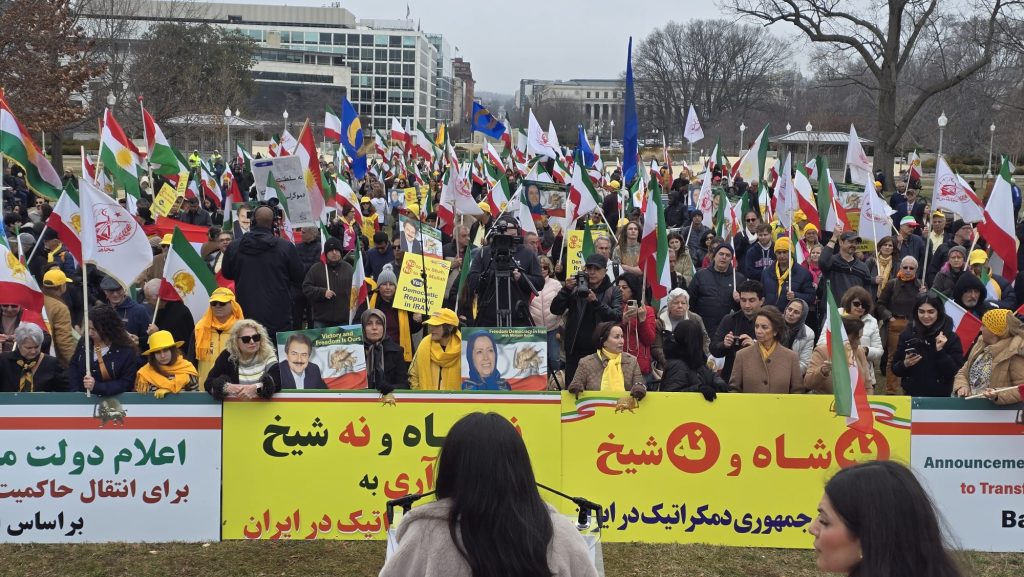
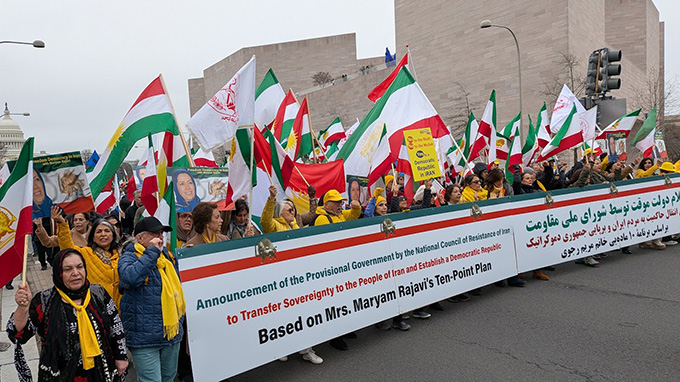
WASHINGTON, March 7, 2026 – On Saturday March 7, 2026, Washington, DC witnessed a remarkable gathering of Iranian‑Americans and representatives of Iranian communities from across the United States. The demonstration was held in support of Mrs. Maryam Rajavi’s announcement of the Provisional Government, a milestone moment for millions who seek a democratic, secular, and free Iran.
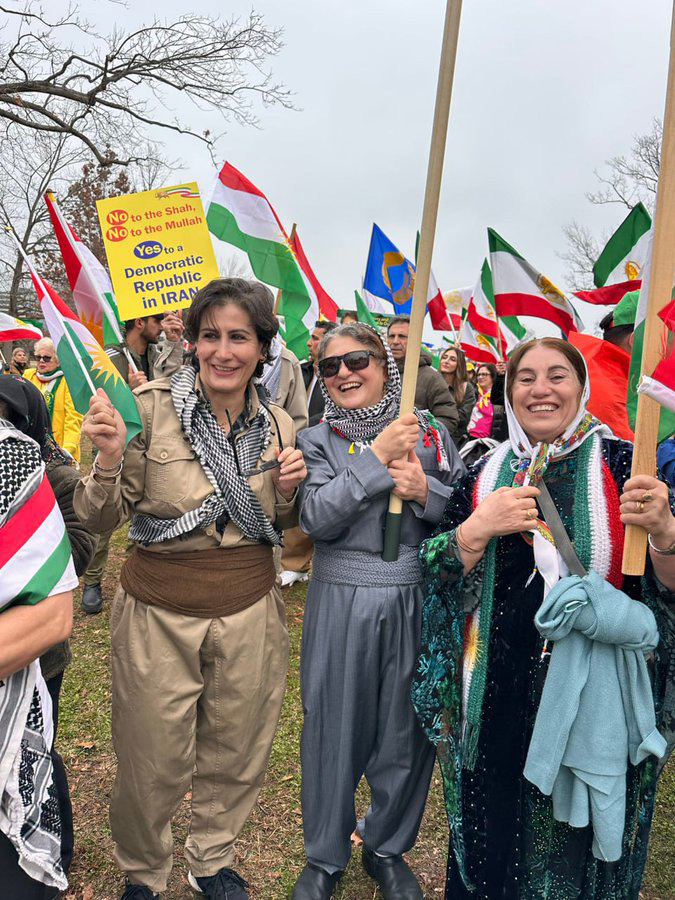
Participants included members of Iran’s diverse nationalities and ethnicities, Kurds, Baluchis, Azeris, Lurs, Arabs, and many more, standing shoulder to shoulder in unity. The presence of Iranian youth representatives added an unmistakable energy and hope for the future.
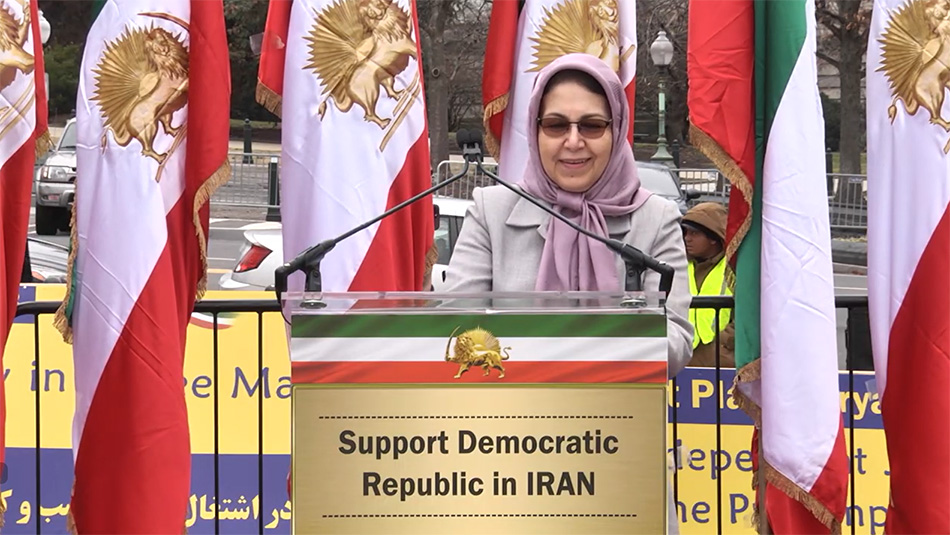
One of the distinguished speakers was Ms. Soona Samsami, the U.S. Representative of the National Council of Resistance of Iran (NCRI). Her remarks underscored the urgency of this moment and the unwavering determination of the Iranian people. She emphasized that the January uprising once again proved the nation’s resolve to end religious dictatorship and establish a democratic republic.
Ms. Samsami highlighted the NCRI’s long record of exposing the regime’s nuclear deceptions, the failures of decades of Western appeasement, and the growing strength of the organized resistance inside Iran. She reaffirmed key principles for Iran’s future: dismantling repressive institutions, ensuring national unity, rejecting both theocracy and monarchy, and upholding the guiding principle of “Neither Shah nor the Mullahs.”
On the occasion of International Women’s Day, she also stressed the decisive leadership of women in Iran’s democratic movement — a force that has shaped the struggle for freedom for decades.
Below is Ms. Samsami’s full remarks (also available on YouTube).
Dear Friends,
Thank you for coming to this rally in support of change by the people of Iran.
In January, the Iranian people rose in a nationwide uprising demanding freedom. Thousands paid a heavy price for their courage. Their sacrifice has once again demonstrated that the Iranian people are determined to end religious dictatorship and establish a democratic republic.
Today, the ruling system in Iran is facing its deepest crisis. Decades of repression, corruption, and the regime’s destructive nuclear and missile programs have brought nothing to the Iranian people except poverty, instability, and international confrontation.
Over two decades ago, the NCRI’s office in Washington, DC exposed the regime’s secret nuclear sites, which triggered the IAEA inspections of the Iranian nuclear sites.
By a series of revelations, the NCRI prevented the fundamentalist regime from surprising the world with an atomic bomb. The events we see today show clearly that decades of Western appeasement toward the regime have been counter productive and a grave mistake.
Today, despite the tensions and conflicts surrounding Iran, the decisive force that will decide the country’s future is the Iranian people and their organized resistance.
During the January uprising, the people demonstrated once again their deep-rooted desire for a democratic republic. The activities of the Resistance Units across Iran also show that regime change by the Iranian people and their organized resistance is a realistic path supported by a growing movement inside the country.
At the same time, the National Council of Resistance of Iran (NCRI) has presented a clear democratic roadmap for Iran’s future. It includes the provisional government based on Mrs. Maryam Rajavi’s Ten-Point Platform after the overthrow of the regime, whose responsibility will be to transfer sovereignty to the people and hold free and fair elections within six months to establish a national constituent assembly.
Allow me to highlight several key principles for Iran’s future.
First, the Iranian people are resolute to end religious dictatorship.
Second, institutions responsible for repression—including the Revolutionary Guard Corps, must be dismantled.
Third, the future of Iran must be based on national unity and democratic principles. The Iranian Resistance has called for a broad national solidarity among all forces committed to democracy, separation of religion and state, and a republic based on the will of the people. We have committed to securing the rights of all nationalities in Iran, including the Kurds, Azeris, Baluchis, Lurs, Arabs, Turkmen, and Gilakis.
Fourth, the Iranian people and their organized resistance have paid a heavy price to bring democracy in Iran and reject both religious tyranny and a return to monarchy. Their guiding principle remains clear: “Neither Shah nor the Mullahs.”
Fifth, only the people of Iran have the legitimacy to determine their country’s future. The destiny of Iran will be decided by its own people and their struggle for freedom.
Dear friends,
On this International Women’s Day, I want to emphasize one essential truth: women’s leadership is at the heart of Iran’s democratic movement.
Women have played a decisive role in the Iranian Resistance for decades against the regime’s misogyny and repression and leading the struggle.
Their movement carries progressive demands: no to compulsory hijab, no to compulsory religion, and no to compulsory rule.
For this reason, the movement led by women represents the most viable democratic alternative to the current misogynous dictatorship.
At this historic moment, supporting the Iranian people and their democratic alternative is not only an act of solidarity—it is the only way to end the threat of the Iranian regime, which not only fulfills the desire of the Iranian nation but is also vital for peace, stability, and security in the region and beyond.
No matter the level of cruelty that the regime exerts on the people, the Iranian nation, women and men, have made a firm commitment to end theocracy. A very high price has already been paid. The path ahead of us will inevitably lead to victory. Indeed, Iran WILL BE FREE.
Thank you so much.
Major news agencies, including The Washington Times, Reuters, and several local TV stations, covered the gathering and the march. The Washington Times report is available here.