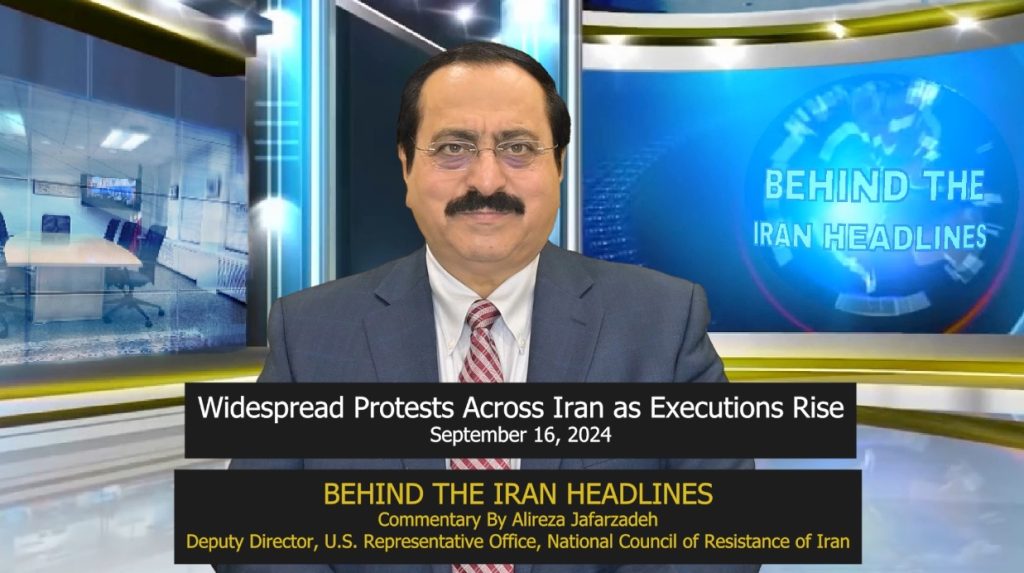
BEHIND THE IRAN HEADLINES Series, September 16, 2024, Alireza Jafarzadeh, NCRI-US Deputy Director
On September 9 and 11, 2024, Iran’s regime executed at least 12 prisoners, including Morteza Yousefi, a former national Greco-Roman wrestling champion. Yousefi, who had spent 10 years in Noshahr Prison, held a degree in physical education and was a respected coach and referee. Alongside him, prisoners Sajad Bandegi, Abdolrahman Tajik, and Behnam Bagheri were executed in various prisons.
These executions occurred against the backdrop of widespread unrest across Iran. Workers, retirees, and other marginalized groups continue to protest against economic mismanagement, corruption, and harsh working conditions. In Tehran, electric taxi drivers demonstrated decrying poor municipal policies. Retired government employees in Kermanshah rallied for higher pensions, while factory workers at Barez Tires in Kerman extended their strike, demanding better wages and safer conditions.
Oil sector workers at Pars Oil and Gas in Kangan, as well as truck drivers in Fars province, also staged protests, underscoring widespread dissatisfaction with the regime’s economic policies. Protests have also spread to the education sector, with service workers in Tehran threatening to shut down schools unless their demands are met.
The growing unrest, particularly among determined workers, retirees, and healthcare professionals, despite rising executions, signals a deepening crisis as frustration with the regime’s corruption and brutality continues to build. The movement to topple the religious tyranny ruling Iran and establish a democratic republic is advancing.
As the regime intensifies repression, and on the second anniversary of the September 2022 uprising, the Iranian Resistance calls on international bodies to intervene and prevent further executions.