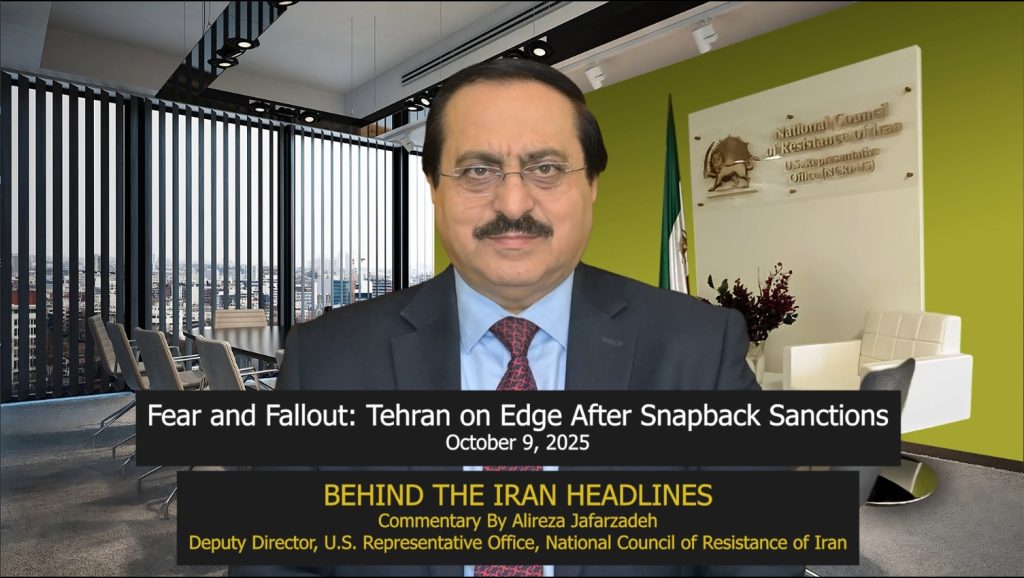
BEHIND THE IRAN HEADLINES Series, October 9 , 2025, Alireza Jafarzadeh, NCRI-US Deputy Director
The reactivation of UN snapback sanctions has sent shockwaves through Tehran. Far from projecting confidence, Iran’s rulers have plunged into a state of heightened alert—militarily, politically, and psychologically—betraying deep fears of what renewed international pressure might unleash at home.
In parliament, cracks are showing. Some lawmakers, like Abbas Goudarzi, warn that focusing too much on sanctions only “plays into the enemy’s hands” and breeds public anxiety. Others call for “sacred unity,” urging all factions to close ranks. Yet beneath the rhetoric of cohesion lies unmistakable panic.
Meanwhile, Iranian regime’s military and security apparatus are on edge. Since late September, the army, IRGC, Basij, and police have surged into high readiness. Tens of thousands of personnel have been deployed across cities, rehearsing crowd control and rapid-response drills. Intelligence coordination has intensified, media restrictions tightened, and propaganda campaigns launched to tout “economic achievements.”
These moves, framed as defense, reveal anxiety—not assurance. Faced with inflation, currency collapse, and public discontent, the regime is scrambling to prevent unrest and project strength abroad.
In truth, Tehran’s reaction is less about deterrence than survival. The louder the calls for unity and defiance, the clearer the signal of internal fear. The snapback hasn’t just reimposed sanctions—it’s exposed a government on edge, unsure how long it can contain the pressures closing in from every side.
Now, those pressures are boiling over. Across Iran, protests are flaring up over water and electricity shortages, unpaid salaries, and horrific working conditions. Factories, oil workers, and teachers are rising in defiance. The country is simmering with discontent, and even regime insiders warn that a major uprising is no longer a question of if, but when.
In anticipation, the clerical rulers have escalated their campaign of terror—ramping up executions of political prisoners, rounding up activists, and tightening surveillance. Yet repression is losing its edge. The growing wave of anti-IRGC and anti-repression operations by Resistance Units underscores a shifting reality: brute force can no longer guarantee control. The regime’s fear-driven mobilization reveals not confidence, but the unraveling of a tyranny that senses its end may be drawing near.