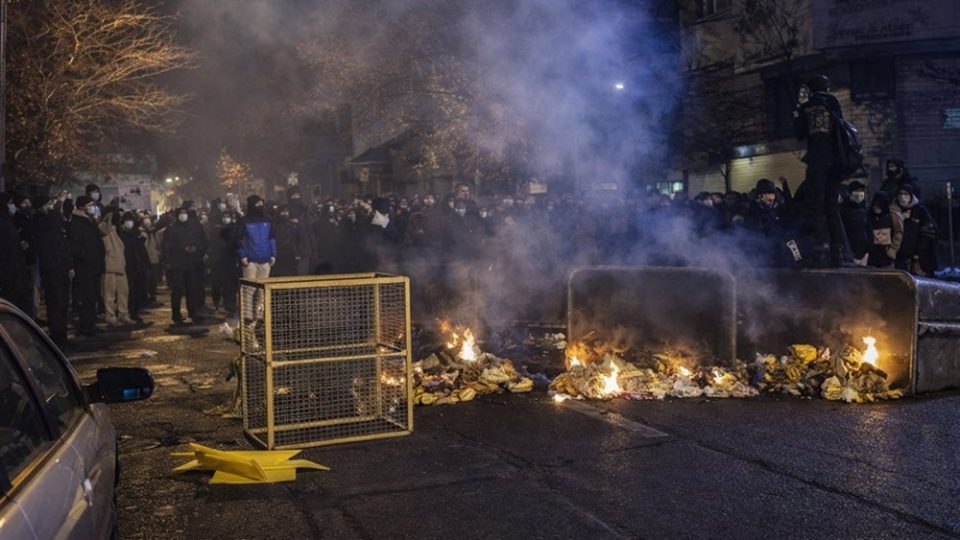
Officials increasingly cast economic distress as a security concern months after the January uprising
By NCRI-US Staff
WASHINGTON, Oct. 7, 2026 — Senior officials of Iran’s ruling regime are increasingly warning about public anger as inflation surges, the rial trades near record lows, and economic hardship deepens months after the nationwide January 2026 uprising posed the most serious domestic challenge to the ruling clerical regime in years.
Alireza Jafarzadeh, Deputy Director of the NCRI Washington Office (NCRI-US), said, “The Iranian society, despite the killings and repression, remains explosive. The economic problem in Iran is fundamental and systemic. The next round of uprising is imminent, as the society sees overthrowing the regime as the only cure.”
Gholam-Hossein Mohseni-Ejei, head of the regime’s judiciary, warned officials this week against actions that could “anger the people” or deepen divisions in society. His remarks, carried by regime-aligned media, also stressed maintaining cohesion and preventing adversaries from exploiting internal discontent.
The warning comes amid rapidly worsening economic indicators. Reuters reported Saturday that the rial had fallen to about 2.69 million to the U.S. dollar, losing more than half its value over the previous year, while inflation had risen above 70 percent. Rising prices have increasingly put rent, food, and other basic necessities beyond the reach of many households.
Economic Discontent Becomes a Security Concern
Other regime officials have been unusually explicit about the potential political consequences. Ali Babaei Karnami, chairman of the parliament’s Social Committee, said inflation on some goods had reached 150 to 160 percent. He acknowledged broad dissatisfaction among workers and retirees and warned that under different circumstances, “other things would happen.”
The security apparatus is using similar language. Ahmad-Reza Radan, commander of the regime’s State Security Force, recently described merchants and businesses as “officers” in an “economic war,” illustrating how authorities increasingly treat economic management and internal security as overlapping concerns.
That convergence matters particularly after the January uprising. The revolt began amid economic collapse and rapidly developed into a nationwide challenge to the regime. In February, the Washington office of the National Council of Resistance of Iran (NCRI) presented classified documents and internal recordings indicating that regime officials had anticipated large-scale unrest driven by economic deterioration and had developed plans to suppress it.
Alireza Jafarzadeh summarized the document’s implications at the February briefing: “The regime knew it could not fix the crisis. So, it chose violence as policy.”
A Washington Policy Dimension
The renewed warnings about public anger are emerging as Washington intensifies economic pressure on the regime. On October 1, the U.S. Treasury Department expanded its “Operation Economic Outcast,” targeting automotive, rail, manufacturing, and steel networks that Treasury says provide revenue and logistical capacity to the regime and the Islamic Revolutionary Guard Corps (IRGC).
Reuters reported in August that regime leaders were already concerned that additional U.S. economic pressure could worsen hardship and contribute to renewed unrest.
The latest statements offer a window into how Tehran’s rulers themselves assess the intersection of economic pressure and domestic stability. Whatever weight they assign to sanctions, war-related disruption, corruption, or longstanding economic mismanagement, senior regime figures increasingly discuss economic hardship not merely as a fiscal problem but as a destabilizing security challenge.
Nine months after the January uprising, their warnings suggest that the economic and social pressures that helped ignite that revolt remain unresolved—and remain central to the regime’s calculations about its own longevity.
About the Iranian Resistance
The National Council of Resistance of Iran (NCRI) is a coalition advocating a democratic, secular republic in Iran. Maryam Rajavi, the NCRI’s President-elect for the transitional period, has outlined a Ten-Point Plan for a future democratic Iran. The People’s Mojahedin Organization of Iran (PMOI), also known as the Mujahedin-e Khalq (MEK), is the NCRI’s principal organized movement.